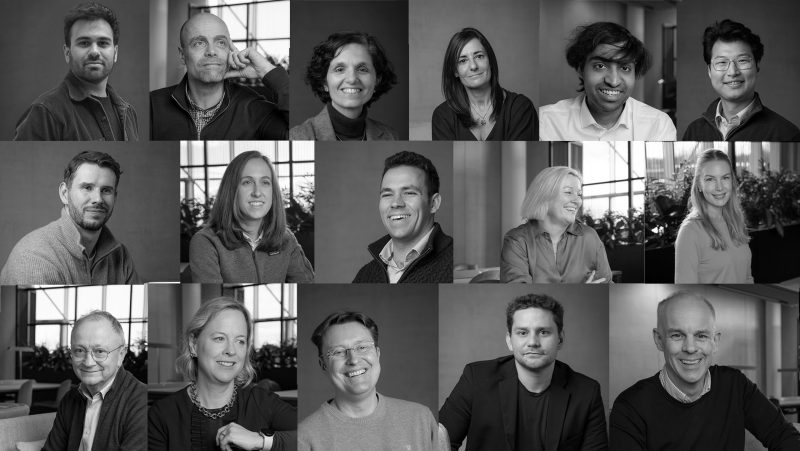
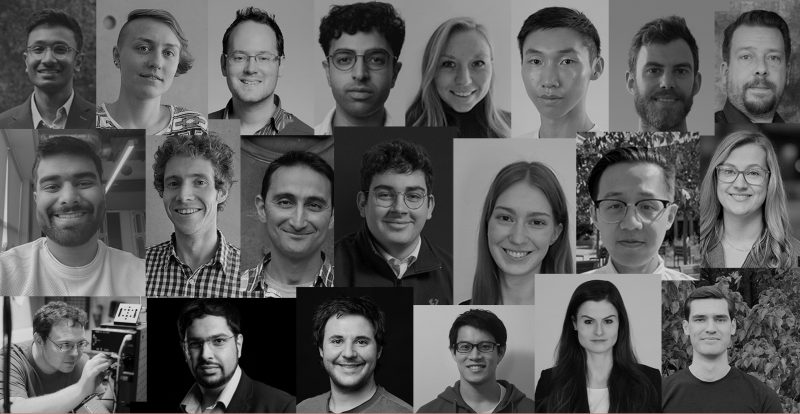
Explore the founders and companies supported through Founders at the University of Cambridge. Rooted in University research, teams are powering growth through science, building ventures with real‑world applications that address global challenges – from climate change and mental health to disease treatment and food security. These companies span early‑stage ideas through to growing ventures across deep tech, life sciences, physical sciences and more.
The Investor Day Lookbooks provide a closer view of companies supported through START, our flagship pre-seed accelerator programme, as teams reach key milestones toward commercialisation.
Electra Bio is building bioelectronic lab-grown organs, making drug discovery smarter and faster.
Complex, three-dimensional tissue cultures have been identified as a solution to the inefficiency crisis at the heart of drug discovery, with organ-on-chip models shown to be capable of screening out ineffective drug assets before they incur significant costs. However, extracting the data needed to realise this potential has proven intractable. Until Electra Bio solved it.
The team has built a system which blends biology and embedded sensors to create living electronics, accelerating the journey from concept to cure, opening the way for data rich experimentation and the data-driven future of drug discovery.
Cambridge Adaptive Testing delivers rapid, precise mental health assessments in under 60 seconds, utilising innovative technologies to identify individuals in need of support.
Cambridge Adaptive Testing delivers rapid, precise mental health assessments in under 60 seconds, utilising innovative technologies to identify individuals in need of support.
Its Class LA medical device platform uses adaptive testing to personalise measurement, making it efficient, engaging and ideal for repeated use. Built for organisations, it identifies who needs support and instantly connects them to resources, tracking change over time to evaluate the impact of interventions. With seamless delivery at scale, the powerful analytics dashboard provides real-time insights. An organisational heatmap enables leaders to tailor approaches to employee wellbeing and measure ROI.
Scalable, evidence-based and designed for today’s organisations, the team is redefining how mental health is measured and managed.
Gastrobody Therapeutics is developing ultra-stable antibody mimetics capable of withstanding the harsh acidic and protease-rich conditions of the GI tract.
Gastrobody Therapeutics is developing ultra-stable antibody mimetics capable of withstanding the harsh acidic and protease-rich conditions of the GI tract.
The team aims to utilise its patented Gastrobody platform to develop orally administered biologics, transforming the way we treat gastrointestinal tract diseases such as Crohn’s disease and Ulcerative Colitis.
The Gastrobody platform combines the exquisite specificity of antibodies with the stability of certain soybean proteins to generate a novel class of biologics which can be delivered directly to the GI tract rather than systemic administration by injection, used in existing antibody-based therapies.
Pinepeak develops physics-driven technology to predict wildfire risk and behaviour across any terrain, anywhere in the world.
Born out of jet engine research at the University of Cambridge and built by a world-class team in combustion science, AI and geospatial intelligence, Pinepeak delivers ultra-granular, physics-driven wildfire forecasts at the asset level – empowering re/insurers to price risk more accurately, emergency responders to act faster and communities to better protect lives and the environment.
Using AI to forecast brain disease progression, Prodromic is accelerating the search of new treatments to enable earlier diagnosis, smarter clinical trials and more personalised treatment.
Using AI to forecast brain disease progression, Prodromic is accelerating the search of new treatments to enable earlier diagnosis, smarter clinical trials and more personalised treatment.
Its SaaS solutions accurately predict brain disease trajectories, starting with a validated use case in dementia. Prodromics’ products de-risk the development of diagnostic biomarkers, make clinical trials of new therapeutics more efficient and effective and improve treatment decision-making for patients and health systems.
Validated on 20,000+ patients from around the world, the team’s multimodal AI engines separate “clinically indistinguishable” individuals to predict disease trajectories over 5 years.
Sqwish is the smart performance layer sitting between AI apps and model providers - dynamically optimising speed, performance, cost and reliability at scale.
Sqwish is the smart performance layer sitting between AI apps and model providers – dynamically optimising speed, performance, cost and reliability at scale.
Founded by Dr Ushnish Sengupta and Federica Freddi, Sqwish acts as the “autopilot” for AI engineering. Its adaptive performance platform for generative AI apps and agents uses real-time reinforcement learning to optimise prompts, models and context.
Built for teams deploying AI in production, it goes beyond technical metrics – cutting costs, boosting speed and improving accuracy to deliver AI that learns from every interaction and drives measurable outcomes.
Trismik is dedicated to revolutionising the field of Large Language Model (LLM) testing, providing an adversarial platform that enhances model accuracy, safety and alignment with societal values.
Trismik is dedicated to revolutionising the field of Large Language Model (LLM) testing, providing an adversarial platform that enhances model accuracy, safety and alignment with societal values.
As AI becomes embedded in everyday tools, the need to test large language models for safety, reliability and bias continues to grow – and so do the challenges.
Trismik’s adaptive platform gives AI teams a faster, smarter way to evaluate generative models, rigorously checking for real-world risks like hallucinations and factual errors without compromising on performance or values. By making trustworthy AI possible at scale, Trismik is helping organisations build technology people can rely on.
Stealth
A new quantum computing company operating in the semiconductor space, currently in stealth mode.
Aetosense
AetoSense develops advanced air quality monitoring systems that enhance indoor air quality and optimise energy consumption by detecting ultrafine particles.
AetoSense develops advanced air quality monitoring systems that enhance indoor air quality and optimise energy consumption by detecting ultrafine particles.
On a mission to revolutionise control strategies around air quality, AetoSense’s ultrafine particle monitoring solutions focus on the critical impact of airborne particles.
Led by a founding team of particle detection experts, AetoSense has developed proprietary optical detection and flow conditioning technology, which enables market-leading sensors’ sensitivity at a competitive cost.
AetoSense technology is offered to air handling systems retailers to provide healthier and more efficient working environments, with four ongoing pilot projects. These sensors will be fundamental for building management under the 2027 regulation on air quality monitoring in the EU and UK, opening up a $25bn market opportunity.
By inhibiting biofilms, BioTryp’s technology has the potential to revolutionise how we treat infection, providing a needed alternative to traditional antibiotic treatment.
By inhibiting biofilms, BioTryp’s technology has the potential to revolutionise how we treat infection, providing a needed alternative to traditional antibiotic treatment.
Bacteria form biofilms as a protective shield against the immune system and antibiotics. Within biofilms, bacteria thrive, meaning that infections worsen, and treatments fail. With an initial focus on addressing the widespread issue of urinary tract infections (UTIs), BioTryp are developing novel small-molecule antibiofilms for bacterial infections. UTIs affect 400 million people annually, and biofilms in UTIs contribute to treatment failure and severe complications, making this a crucial challenge to solve.
BioTryp has already gained traction with multiple awards, grants and investment.
BravelyCultured is developing sustainable, skin-friendly biodegradable chemicals, with an initial focus on biosurfactants for personal and home care products.
BravelyCultured is developing sustainable, skin-friendly biodegradable chemicals, with an initial focus on biosurfactants for personal and home care products.
Using proprietary marine microbes, BravelyCultured is replacing animal, tropical oil, and petroleum-based products, starting with eco-friendly biosurfactants to replace their petroleum-derived counterparts.
James Dunce and his team are on a journey to disrupt the surfactant market sustainably. Their technology reduces environmental pollution, avoids reliance on fossil fuels, minimises deforestation and significantly lowers CO2 emissions.
Cambridge Vision Technology has developed a groundbreaking, non-invasive approach to Alzheimer’s disease risk screening using just a simple eye exam.
Early detection of Alzheimer’s Disease is crucial for timely intervention and to slow the progression of the disease, but diagnosis is often lengthy and invasive.
This innovative technology analyses images of the retina, the back of the eye, which is an extension of the central nervous system. Subtle biomarkers in the retina can be detected with standard eye examination techniques. CVT uses AI to analyse these retinal images, identifying signs of Alzheimer’s at its earliest stages, even before symptoms appear.
The team secured a contract with the UK government to deliver their novel solution, following successful trials with academic partners.
Molyon is producing the next-gen energy storage, lithium-sulfur batteries, offering long-life batteries with twice the energy density of current lithium-ion batteries.
Molyon is producing the next-gen energy storage, lithium-sulfur batteries, offering long-life batteries with twice the energy density of current lithium-ion batteries.
Next-generation batteries, which are lighter and smaller, are needed to support the net-zero transition. A commercial lithium-sulfur battery based on Molyon’s innovation provides superior performance at a lower cost, boosting the performance of weight-critical applications and enabling new modes of transport like electric aviation.
Molyon’s Li-S batteries, with superior chemistry, deliver twice the energy density of current lithium-ion batteries on the market at a fraction of the price due to more abundant materials.This breakthrough could double the range for transportation applications, tapping into an $85 billion global market.
Nanomation provides computer-vision software to the semiconductor industry, enabling clients to manufacture with advanced nanomaterials that are otherwise not usable within industry settings.
Nanomation provides computer-vision software to the semiconductor industry, enabling clients to manufacture with advanced nanomaterials that are otherwise not usable within industry settings.
Using semiconducting nanomaterials makes electronics faster, more powerful and more efficient. They can add sensing, quantum and photonic functionalities to chips, which are not possible using traditional silicon alone. However, manufacturing with nanomaterials is currently impossible at a commercial scale, as they require manual integration that is too costly for industry.
Nanomation’s fully automated software solution means there is no need for manual integration. It provides highly accurate feature identification at the nanoscale, material characterisation and automated circuit layout design, enabling commercial development of advanced electronics applications.
Orbit is revolutionising mental health by making it as clear and actionable as physical health, using groundbreaking non-invasive neurotechnology.
Despite continuous and rapid technological advancements, mental health and wellbeing has been left behind and is still not well understood. By collecting unprecedented amounts of functional brain data, Orbit aims to illuminate (literally) how our brain works.
With a powerhouse team skilled in software, consumer hardware and neuroscience, Orbit is crafting a state-of-the-art wearable. Its mission is to decode and enhance cognition by creating the first-ever foundational model of the brain in the real world, using advanced, non-invasive techniques.
Protonera specialises in converting waste plastics into green hydrogen, providing sustainable waste management solutions to reduce reliance on fossil fuels.
Protonera specialises in converting waste plastics into green hydrogen, providing sustainable waste management solutions to reduce reliance on fossil fuels.
There are three major bottlenecks in the plastic recycling market: the inability to process low-grade waste feedstocks, high operational costs from sorting contaminated feedstocks and poor revenue from low-value products.
Protonera aims to realise the scalability of a novel plastic upcycling technology, transforming waste plastics into green hydrogen and other value-added commodities. The team is creating a solution that degrades low-grade waste plastics that are not currently recycled and realises high profitability from product revenue.
VOLTQUANT offers the world’s first search engine for grid connections, empowering developers to connect seamlessly using a machine-learning-enabled platform.
VOLTQUANT offers the world’s first search engine for grid connections, empowering developers to connect seamlessly using a machine-learning-enabled platform.
The company’s focus on the UK’s advanced smart energy grid aims to tackle challenges associated with the transition to net-zero energy infrastructure, particularly the instability of renewable sources.
By providing solutions for stakeholders and navigating the complexities of the UK’s smart grid, VOLTQUANT aims to contribute to global efforts in sustainable energy development and assist other countries facing similar challenges in achieving their net-zero goals.
William Oak Diagnostics is developing a digitally integrated, point-of-care test for micronutrient deficiencies and anaemia, designed for use in pharmacies and at home.
William Oak Diagnostics is developing a digitally integrated, point-of-care test for micronutrient deficiencies and anaemia, designed for use in pharmacies and at home.
With over 70 years of medical device commercialisation expertise, the team’s innovation is improving healthcare access and enabling early intervention. By shifting deficiency screening from primary care to the community, the solution addresses widespread issues such as iron deficiency anaemia and other serious nutrient deficiencies, helping reduce the burden on GPs and the need for costly hospital-based diagnostics.
William Oak’s novel approach simplifies blood collection and delivers clear, quantifiable results through a user-friendly mobile app. The technology has the potential to personalise nutritional health monitoring, empowering individuals to take control of their wellbeing.
 Close
Close